
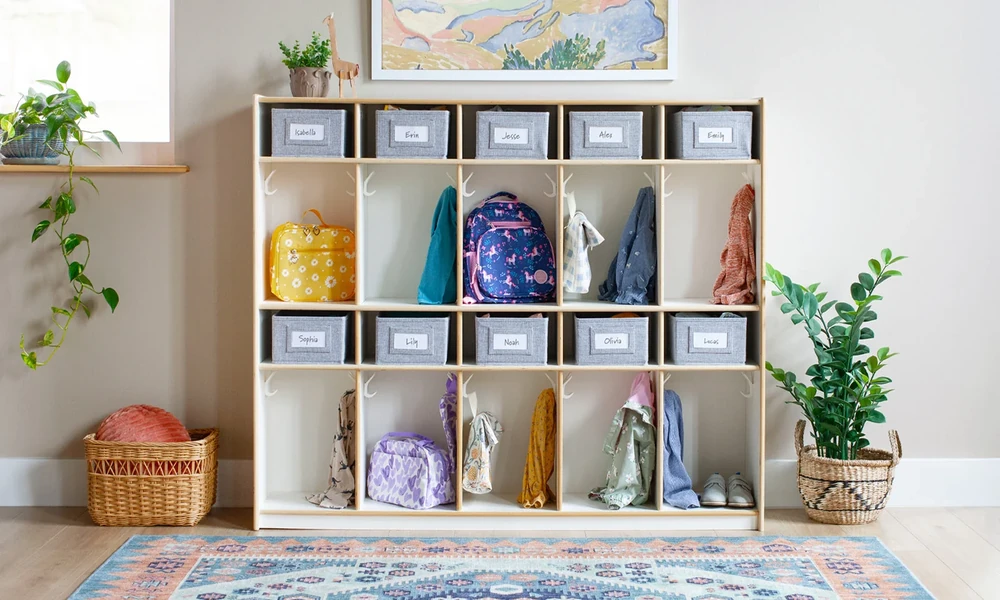
Cubbies support routines in early childhood classrooms by giving each child a consistent, reachable place for backpacks, coats, and personal items. That simple storage becomes part of how young children learn independence, responsibility, and the rhythm of arrival and departure each day.
Head Start programs have served young children and their families since 1965 (Office of Head Start).
What are classroom cubbies?
Classroom cubbies are open storage compartments, usually without doors or locks, sized and positioned for young children. Each cubby typically includes a hook for coats or bags and a shelf or compartment for smaller items.
Settings that suit open storage
Cubbies suit settings where locked storage is not needed. Preschools, day care centers, kindergarten classrooms, church education rooms, and after-school programs commonly use them. The open design allows teachers to see belongings quickly and helps children find their own space without assistance.
Where open cubbies are specified
Open cubbies are specified where non-locked storage is appropriate, including preschools, day care centers, churches, mail rooms, laundry rooms, and retail outlets (ASI Storage Solutions).
Why do cubbies matter for child development?
Cubbies matter for child development because they give children a daily opportunity to practice self-care tasks like hanging a coat, putting away a lunch box, and retrieving belongings at the end of the day. These small actions build independence and fine motor skills.
Skills children practice using cubbies
- Hanging items on hooks
- Organizing personal belongings
- Recognizing their name or photo label
- Following a consistent arrival routine
- Taking responsibility for their own items
Early childhood environments that promote children’s independence and development are a priority for federally supported programs (Office of Head Start). Well-designed classroom storage is one practical part of that environment.
How should cubbies be sized for young children?
Cubbies should be sized so that children can reach hooks and shelves independently and so that compartments hold the items children actually bring, such as backpacks, jackets, and extra clothes. Storage that sits too high forces children to ask for help every time.
Sizing by age group
Sizing varies by age group. Toddler rooms need lower hooks and shallower compartments than kindergarten rooms. Programs serving mixed ages may choose cubbies that work for the youngest children in the room.
Sizing considerations
- Hook height reachable by the youngest children in the room
- Compartment depth for backpacks and folded clothing
- Width that separates each child’s items clearly
- Bench or seat height for putting on shoes
Why are materials and construction important?
Materials and construction are important because cubbies face daily contact from children, frequent cleaning, and occasional climbing. Durable, smooth surfaces resist damage and simplify sanitizing.
Cleaning in early childhood rooms
Early childhood programs clean surfaces regularly to reduce the spread of illness. Nonporous materials that tolerate frequent wiping perform better over time than surfaces that absorb moisture or chip easily.
How do cubbies improve classroom organization?
Cubbies improve classroom organization by giving every child’s belongings a defined home, which keeps floors and tables clear and reduces lost items. Teachers spend less time searching for missing mittens or lunch bags.
Organizational benefits
- Faster morning drop-off
- Fewer lost or mixed-up items
- Clear floor space for play and learning
- Easier end-of-day dismissal
- Visual cues that support classroom routines
Labeling each cubby with a child’s name, photo, or symbol helps pre-readers recognize their space. Consistency in placement throughout the year reinforces the routine.
What safety considerations apply to cubbies?
Safety considerations for cubbies include stability, rounded edges, secure installation, and placement that does not block exits or circulation paths. Young children may lean on, pull on, or climb furniture.
Anchoring and tip-over prevention
Anchoring furniture helps prevent tip-over injuries (U.S. Consumer Product Safety Commission). Programs should follow manufacturer installation instructions and applicable local requirements when installing freestanding or wall-mounted cubbies.
Safety checklist
- Anchor units according to manufacturer instructions
- Choose designs with smooth, rounded edges
- Keep heavy items off upper shelves
- Maintain clear pathways in front of cubbies
- Inspect hooks and fasteners regularly
Where should cubbies be placed in the classroom?
Cubbies should be placed near the classroom entrance so children can store belongings immediately on arrival and retrieve them easily at departure. Placement near the door keeps outdoor gear, wet boots, and backpacks from traveling through the learning space.
Storage near outdoor play entrances
Programs with separate entrances for outdoor play may benefit from a second set of hooks or storage near that door. Coordinating cubby placement with sinks and restrooms supports hygiene routines as well.
How do cubbies support family communication?
Cubbies support family communication by providing a consistent place to leave notes, artwork, and daily reports for parents and caregivers. Families learn where to look for items at pickup, and teachers can use the space to return completed projects.
Mail slots and folder holders
Some programs add a mail slot or folder holder to each cubby for this purpose. The result is a simple system that connects the classroom and the home.
Why are cubbies a lasting investment?
Cubbies are a lasting investment because they serve new groups of children every year and play a daily role in classroom routines. Durable, well-sized cubbies support independence, organization, and safety for years of use.
Storage as part of teaching
For early childhood educators, storage is part of teaching. The right cubbies help children practice responsibility every day, one hook and one backpack at a time.
