
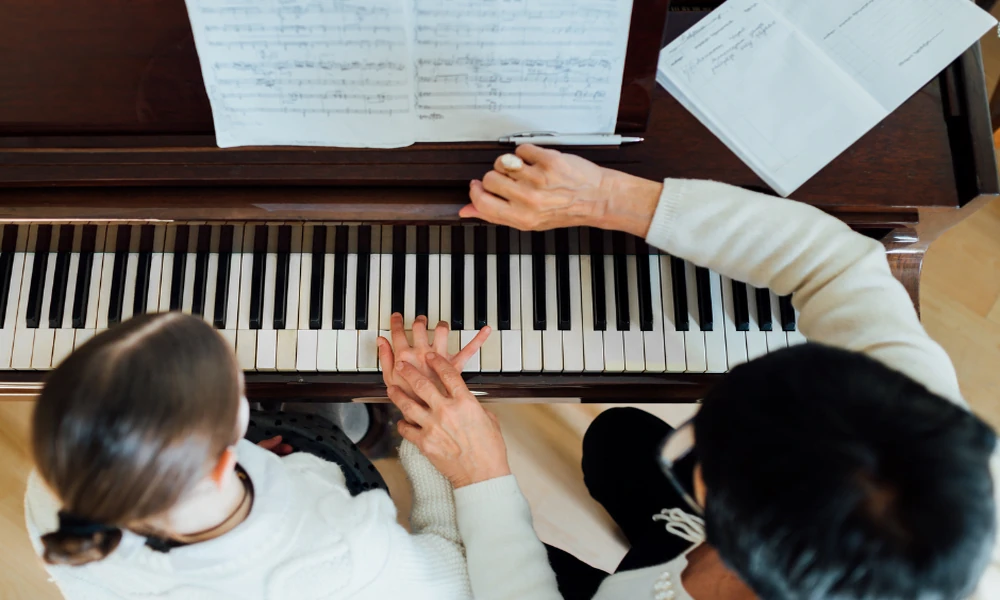
A seven-year-old who is told that piano practice is good for brain development will find the argument unpersuasive. What works is a teacher who makes the lesson itself engaging, who chooses pieces the child actually wants to play, and who builds the technical foundations without making the student feel like they are doing tedious exercises. Piano class for kids singapore parents choose should meet this standard. Fun and structure are not opposites. The best children’s piano teachers deliver both in every session.
Singapore’s children are not short of educational commitments. Between school, tuition, and other enrichment activities, time is a genuinely constrained resource. A piano class that does not produce visible progress and genuine enjoyment quickly loses its place in the schedule. The schools that retain students over the years needed to develop real piano ability are those that make the learning experience positive from the first lesson.
How Children Learn Piano Differently from Adults
Children learn musical skills through a combination of imitation, game-like repetition, and the motivating effect of playing recognisable, enjoyable pieces. The theoretical underpinning of what they are doing can be built in gradually over time; what matters in the early stages is the experience of making music.
Harmony & Pitch’s children’s piano programme uses method books designed specifically for young learners, with colourful notation, familiar melodies, and a progression that introduces new concepts only when the previous ones are reliably in place. Each lesson includes a mix of technical exercises, revision of pieces already learned, and introduction of new material.
Piano class for kids singapore at Harmony & Pitch also incorporates short theory activities within the practical lesson, ensuring that children develop the ability to read and understand notation alongside their playing skills.
The Right Age to Start
Most children are ready to begin piano lessons from around age five or six, though readiness varies by individual. The indicators to look for are the ability to sit still for twenty to thirty minutes, sufficient finger strength to depress keys reliably, and enough numerical understanding to follow basic counting. Children who demonstrate these readiness markers typically progress well in structured lessons from a young age.
Starting too early, before the child has these developmental markers in place, can create a negative association with piano lessons that persists. Harmony & Pitch’s teachers assess each child’s readiness at the start of the programme and recommend an appropriate starting pace.
Keeping Children Motivated
The most common reason children stop piano lessons is loss of motivation, usually during the period when the initial novelty has worn off but real fluency has not yet arrived. This period, which typically falls between six and eighteen months of learning, is when the quality of teaching matters most.
An instructor who can identify and respond to the specific point where a child’s motivation is flagging, by introducing new repertoire the child loves, by adjusting the technical demands to produce quicker wins, or by changing the structure of the lesson to maintain engagement, is worth considerably more than a technically qualified but motivational unaware teacher.
Recitals and Performance
Student recitals at Harmony & Pitch are held regularly and are designed as celebratory events rather than assessments. Children who perform for an audience, even a small and supportive one, develop a relationship with performance that builds confidence over time. They also practise their pieces more diligently in the weeks before a recital, which accelerates technical development.
Parents are encouraged to attend recitals and to hear the pieces their child is working on at home. Parental engagement in the musical learning process significantly increases the likelihood that a child will continue lessons through the critical early years and into the stage where the music itself provides its own motivation.
ABRSM Examination Preparation
Many children in Singapore’s piano programmes work toward ABRSM graded examinations. Harmony & Pitch prepares students for these examinations within regular lesson time, covering the required pieces, scales, sight-reading, and aural tests appropriate to each grade level.
The examination pathway is not mandator, some children thrive on it and some find the examination pressure counterproductive. Harmony & Pitch’s teachers discuss the examination question with parents and students and make a recommendation based on the individual child’s temperament and learning style.
Piano tuition for children at a school that balances technical rigour with genuine enjoyment is the foundation for a lifelong musical relationship. For Singapore families looking for piano class for kids singapore that produces real progress in a supportive environment, Harmony & Pitch provides the teaching quality and student-centred approach that gives children the best chance of loving music for the rest of their lives.

Comments are closed.